Looking for the best neurofeedback device to use at home in 2026? Whether you want to sharpen focus, sleep better, manage stress, or support ADHD, today’s consumer EEG headbands and brain-training wearables make it easier than ever to get started without a clinic visit. We tested and compared 12 of the top devices on the market — covering price, technology, ease of use, and who each one is best for — so you can find the right fit.

Updated April 2026 · 15 min read

Table of Contents

Quick Comparison: All Devices at a Glance

Device Price Technology Best For
Narbis Smart Glasses $690 EEG; NASA-developed tinting lens feedback Focus & attention training (kids & adults)
Narbis Illume $299 Colored light + binaural beats Relaxation & mental state optimization
Muse S Athena ~$450 EEG + fNIRS dual-sensor Meditation & sleep optimization
FRENZ Brainband $680 EEG + EOG + EMG; AI audio therapy Sleep improvement & focus training
Sens.ai ~$1,450 EEG + HRV + photobiomodulation Advanced biohackers
Mendi $299 fNIRS blood-flow training Beginners & prefrontal cortex
BrainBit Headband ~$499 4-channel dry-electrode EEG; open SDK Research & DIY neurofeedback
Neurosity Crown ~$1,499 + $30/mo 8-channel EEG; focus tracking Productivity & developers
Enophone (eno) $399 EEG + personalized music Music-enhanced productivity
NeurOptimal $10,000+ Fully automated dynamical NF Professional-grade home training
NeuroSky MindWave ~$130 Single-channel EEG Budget entry & education
FocusCalm ~$199 EEG with FocusCalm score Stress reduction & brain training
Myndlift $200 hardware + ~$150/mo Clinician-guided EEG + qEEG Therapist-supported training

1. Narbis Smart Glasses

Price: $690 | Best for: Focus & attention training
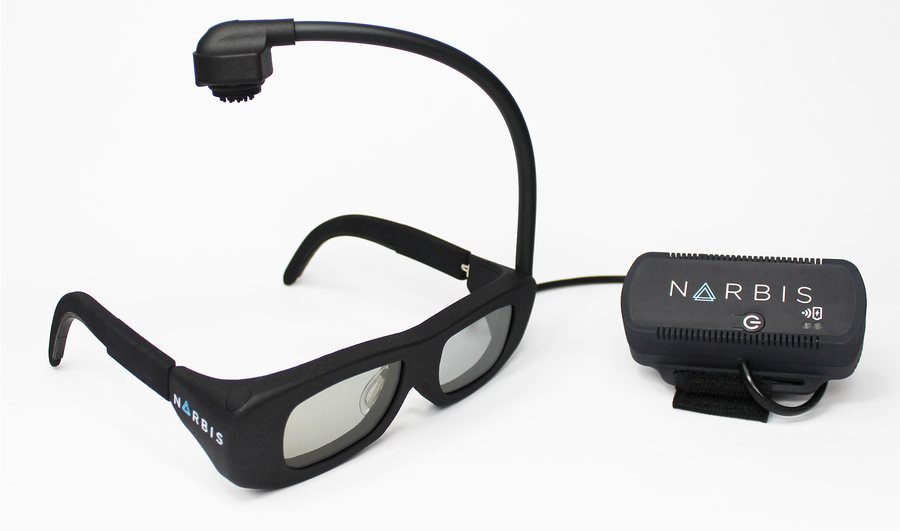
Narbis smart glasses use a NASA-developed algorithm to monitor attention, relaxation, and distraction in real time. Sensors on the head and behind the ears track brainwave patterns — the lenses stay clear when you’re focused and gently tint when concentration dips, creating an intuitive feedback loop.

What makes it stand out:

  • NASA-developed algorithm for real-time attention, relaxation, and distraction tracking
  • Tinting-lens feedback lets you train during everyday activities (no screen required)
  • Dry electrode system — no pastes (optional water gel)
  • FDA-registered; supports multiple users
  • Dedicated programs for focus, relaxation, and calming
  • US Patent 9,521,976 B2 — the only patented biofeedback-driven lens modulation system

Considerations: Narbis is designed for active training — reading, studying, working — not passive screen time. If your goal is to zone out watching videos while a headband does the work, this isn’t that. The glasses form factor also means users with prescription glasses may need to adjust for fit, though the frame is designed to go over most eyewear. For a passive, eyes-closed approach using light and sound entrainment, see the Narbis Illume.

2. Muse S Athena

Muse S Athena

Price: ~$450 | Best for: Meditation & sleep optimization

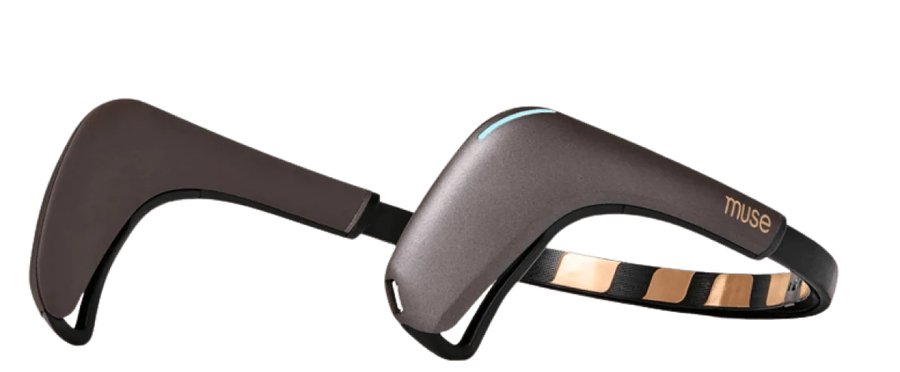
Released in March 2025, the Muse S Athena is the first consumer wearable to combine both EEG and fNIRS (functional near-infrared spectroscopy) in a single headband. While EEG measures electrical brainwave activity, fNIRS tracks blood oxygenation in the prefrontal cortex, giving a more complete picture of your brain state than any previous Muse device.

What makes it stand out:

  • First consumer headband combining EEG + fNIRS dual sensors
  • EEG-based sleep staging (REM, deep, light, awake) — more accurate than wrist trackers
  • “Digital Sleeping Pills” adaptive audio that fades as your brain calms
  • 500+ guided meditation sessions with real-time soundscape feedback
  • 10-hour battery; 41g soft fabric headband comfortable for overnight wear

Considerations: A monthly subscription (over $130/year) is required to unlock all features. Sensor placement is optimized for meditation and sleep rather than active focus tasks. Also the hardware used by Myndlift’s clinician-guided platform (see #12).

3. FRENZ Brainband

Ultra Grey Matter

Price: $680 | Best for: Sleep improvement & focus training

The FRENZ Brainband by Earable Neuroscience is the only consumer device combining EEG (brainwave), EOG (eye movement), and EMG (facial micro-muscle) tracking in one wearable. This triple-sensor approach feeds into an AI engine that delivers personalized audio therapy through bone conduction speakers.

What makes it stand out:

  • Triple-sensor: EEG + EOG + EMG — most sensor types in its price range
  • AI-driven personalized Cognitive Behavioral Therapy audio sessions
  • Bone conduction speakers (no earbuds needed)
  • Focus Flow feature for daytime neurofeedback-style focus training
  • 3x CES Innovation Award winner (2023, 2024, 2025)

Considerations: At $680 it’s priced higher than most consumer headbands. The focus training feature (Focus Flow) is newer and less proven than its sleep capabilities. Fewer independent user reviews compared to established brands like Muse. Currently iOS (iPhone 10+) and select Android only.

4. Sens.ai

Sens.ai headset and mobile app showing Calm session results including overall score, heart rate, and HRV

Price: ~$1,450 | Best for: Advanced biohackers & peak performance

Sens.ai combines neurofeedback with photobiomodulation (light therapy) and heart rate variability (HRV) biofeedback in a single headset. It maps brain frequencies to specific cognitive states and provides 16 structured “Missions” for guided progression.

What makes it stand out:

  • Only consumer device integrating EEG, HRV, and photobiomodulation
  • 16 structured Missions for guided training progression
  • Detailed biometric reports on brain function, heart coherence, and light therapy
  • 20-minute sessions with quantifiable improvement tracking

Considerations: At $1,450 plus membership fees, it’s the most expensive consumer device after NeurOptimal. The headset is bulky and may not suit smaller heads or children. That said, no other consumer device offers this multi-modality combination.

5. Mendi

Price: $299 | Best for: Beginners & prefrontal cortex training

The Mendi headband ($299 with lifetime app access, no subscription) uses functional near-infrared spectroscopy (fNIRS) to measure oxygenated blood flow in the prefrontal cortex. Users control an on-screen ball by increasing blood flow, turning brain activity into a gamified exercise.

What makes it stand out:

  • fNIRS technology (measures blood flow, not just electrical activity)
  • One-time purchase — no subscription required
  • Simple, gamified training starting at just 5 minutes per session
  • Beginner-friendly with intuitive feedback

Considerations: Only targets the prefrontal cortex — won’t capture full-brain activity or specific frequency bands. The game-based interface may feel simplistic for advanced users. fNIRS is a different modality than EEG, so customization and tracking granularity is more limited.

6. BrainBit Headband

Price: ~$499 | Best for: Research, developers & DIY neurofeedback

The BrainBit Headband is a 4-channel wireless EEG device that records from O1, O2, T3, and T4 positions. It uses dry, gold-plated, spring-loaded electrodes and offers a 250 Hz sampling rate with a wide 0–100 Hz frequency band. A free multi-platform SDK lets developers access raw EEG data.

What makes it stand out:

  • 4-channel research-quality EEG with dry gold-plated electrodes (no gel)
  • Free open SDK for developers across multiple platforms
  • 250 Hz sampling rate, 0–100 Hz band
  • Compatible with NeuroFit PRO and NeuroRec apps
  • Global Recognition Award & Top Innovator 2025

Considerations: Positioned at the intersection of consumer and research-grade. The open SDK is a major draw for developers but adds little value for casual users who want a plug-and-play experience. A “Pro” version with additional capabilities is also available.

7. Neurosity Crown

Neurosity crown neurotyczność eeg koncentracja - купить в DARSTAR

Price: ~$1,499 + $29.99/mo membership | Best for: Productivity hackers & developers

The Neurosity Crown uses 8-channel EEG technology to track brain activity, with emphasis on gamma wave monitoring for cognitive enhancement. It claims to reduce time to enter flow state from 25+ minutes to under 5 minutes, and includes a developer-friendly API.

What makes it stand out:

  • 8-channel EEG with gamma wave focus tracking
  • Adaptive audio that changes based on your brainwave readings
  • Wearable while working or studying
  • Developer API for custom applications
  • Onboard CPU retains data even if connection drops

Considerations: At $1,499 plus a $29.99/month membership (after the first year included with purchase), it’s one of the most expensive consumer devices. The gamma-wave focus may not suit users looking for broader EEG training. Best suited for productivity-focused tech enthusiasts and developers.

8. Enophone (eno)

Enophone by eno — Brain-Sensing Headphones

Price: $399 | Best for: Music-enhanced productivity

The Enophone (now rebranded as “eno” after being acquired by Moonshot.la in 2023) combines premium headphones with EEG brainwave monitoring. Four built-in EEG sensors track real-time brain activity and pair with a companion app that generates personalized soundscapes based on your current brain state — making it feel more like listening to music than doing brain training.

What makes it stand out:

  • Personalized soundscapes based on real-time brain activity
  • Music-first approach to neurofeedback
  • Doubles as premium noise-canceling headphones
  • Growing library of neuro-responsive audio across focus, flow, calm, energy, and sleep

Considerations: Currently iOS only (Android in development). The music-enhanced approach differs from traditional neurofeedback targeting broader cognitive function. At $399, you’re paying for both the headphone quality and the EEG capability.

9. NeurOptimal

NeurOptimal

Price: $10,000+ | Best for: Professional-grade home training

NeurOptimal is an advanced neurofeedback system originally designed for clinical use. It’s fully automated — no diagnosis, brain map, or active participation required. While you relax and listen to music or watch a movie, the system detects instability and briefly pauses audio as the training signal.

What makes it stand out:

  • Fully automated — no setup, diagnosis, or active participation needed
  • Professional-grade dynamical neurofeedback
  • Used in clinical settings worldwide

Considerations: Over $10,000 for a home system (rentals from $650–$1,000/month). Requires conductive paste for sensors. 33-minute sessions require dedicated time. The fully automated approach means no customization of training protocols.

10. NeuroSky MindWave

NeuroSky MindWave Mobile 2 EEG Sensor Starter Kit

Price: ~$130 | Best for: Budget entry & education

NeuroSky’s MindWave Mobile 2 uses a single EEG sensor on the forehead with an ear clip reference. At $129.99 and running on a single AAA battery, it is the most affordable EEG device on this list and popular for educational and hobbyist BCI projects.

What makes it stand out:

  • Most affordable EEG device at ~$130
  • Developer SDK for hobbyist and educational projects
  • Game and video-based exercises

Considerations: Single-channel forehead sensor provides limited coverage compared to multi-channel devices. Requires dedicated screen time for training. Rated at 60 Hz — intended for use in 60 Hz electrical regions only (such as the US).

11. FocusCalm

FocusCalm - Biofeedback Device, EEG Headband, Brain Training

Price: ~$199 + subscription | Best for: Stress reduction & brain training

FocusCalm is an EEG-based headband that monitors up to 1,200 EEG data points per second and distills your mental state into a FocusCalm Score from 0 to 100. Designed as an “eyes-open” product — no quiet room or closed eyes required.

What makes it stand out:

  • Simple 0–100 FocusCalm Score for instant mental state snapshot
  • Gamified brain training exercises and meditations
  • “Eyes-open” design — no quiet room needed
  • 1,200 EEG data points per second

Considerations: Limited independent data on long-term effectiveness. Training games may become repetitive over time. Subscription ($9.99/mo, $69.99/year, or $149.99 lifetime) adds to the device cost. Note: FocusCalm is made by BrainCo. Simplicity is its strength — and its limitation for advanced users.

12. Myndlift

Price: ~$199–$450 Muse headband + $150–$500/mo subscription | Best for: Therapist-supported training

Myndlift Neuroscience-Backed Brain Training System

Myndlift bridges clinical neurofeedback and at-home convenience. It pairs with the Muse S Athena headband (~$199–$450 purchased separately) and a specialized electrode kit, delivering clinic-grade protocols from your living room. You get matched with a certified clinician who reviews your qEEG brain map and monitors progress remotely.

What makes it stand out:

  • Only option with professional clinical oversight included
  • qEEG brain mapping with personalized training protocols
  • 1.2 million+ sessions delivered to date
  • Compatible with Muse S Athena hardware

Considerations: The total cost adds up fast — the Muse headband (~$199–$450), electrode kit, and $150–$500/month for clinician involvement makes this the most expensive option long-term, potentially exceeding $3,000+ in the first year. Training requires watching a screen — movies, games, or videos — which means you’re sitting in front of a display rather than going about your day. For some users that’s a feature (who doesn’t want an excuse to stream Netflix and call it therapy?), but it also means you can’t train while studying, working, or being physically active. Uses wet electrodes requiring conductive gel applied to the scalp each session.

Honorable Mentions

The following devices use related technologies (cranial electrotherapy stimulation, heart rate biofeedback, PEMF) rather than traditional EEG neurofeedback.

Fisher Wallace (OAK)
Cranial electrotherapy stimulation (CES) device that stimulates serotonin, endorphins, and melatonin production. FDA-cleared for anxiety, depression, and insomnia. Not neurofeedback — stimulates the brain rather than training through feedback. Not recommended for children.

Mightier
Heart rate biofeedback system for kids. Games respond to heart rate changes to teach emotional regulation skills. $40/month. Heart rate biofeedback, not brain-based neurofeedback.

Omnipemf NeoRhythm
Pulsed Electromagnetic Field (PEMF) therapy headset that emits frequencies for target mental states. $389 per component. PEMF stimulates brain states temporarily — doesn’t train lasting changes like neurofeedback.

Thync FeelZing
Neurostimulation energy patch applied behind the ear for 7 minutes, claiming 4 hours of enhanced focus. External neurostimulation, not neurofeedback. Effects are temporary.

Coming Soon: Narbis Edge

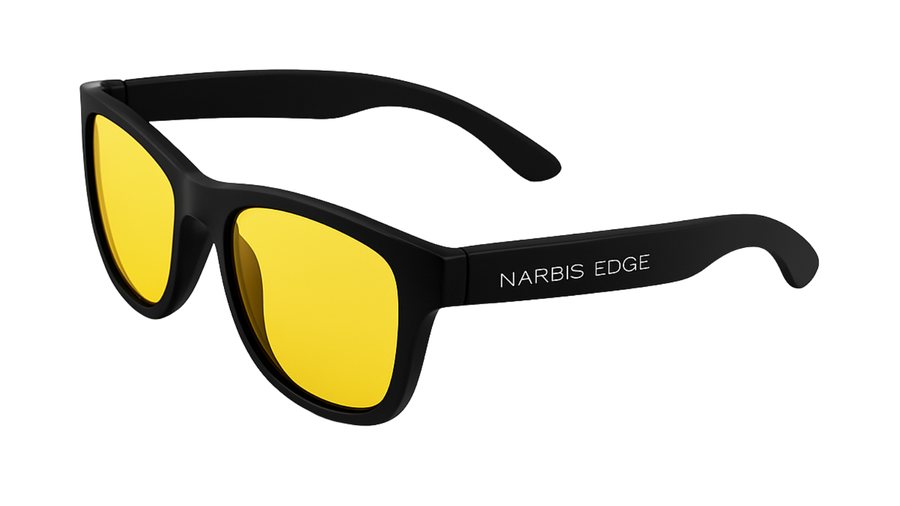
The next generation of biofeedback glasses is in development. Narbis Edge expands beyond EEG neurofeedback to integrate heart rate variability (HRV) monitoring, supporting real-time coherence training through the same patented lens-tinting feedback. Edge connects to external sensors like the Polar H10 for clinical-grade HRV data, and features an open API and SDK for researchers and developers.

Edge is designed for athletes training focus during performance, corporate wellness programs, and first responder readiness — bringing biofeedback out of the clinic and into real-world activity.

Join the Narbis Edge waitlist →

Conclusion

The market for at-home neurofeedback devices has matured significantly heading into 2026. Buyers can now choose from EEG, fNIRS, dual-sensor (EEG + fNIRS), and even triple-sensor (EEG + EOG + EMG) wearables — each targeting different aspects of brain training.

The right device depends on your goals. If you want to train focus during everyday tasks without a screen, Narbis smart glasses offer a unique tinting-lens approach built on NASA-developed algorithms. For meditation and sleep, the Muse S Athena’s dual EEG + fNIRS sensors set a new standard. The FRENZ Brainband leads in AI-driven sleep therapy. And for clinical-grade training at home, Myndlift pairs professional oversight with the convenience of a headband.

As AI-driven analysis, multi-sensor fusion, and real-time brain data processing continue to advance, expect these devices to become even more personalized and effective.

Frequently Asked Questions

What is a neurofeedback device?
A neurofeedback device is a wearable that uses EEG sensors to monitor brainwave activity in real time. It provides audio, visual, or haptic feedback to help you train your brain to reach desired mental states — improved focus, relaxation, or better sleep. Some newer devices also incorporate fNIRS (blood-flow tracking) alongside EEG.

Are home neurofeedback devices FDA approved?
Most consumer neurofeedback devices are classified as general wellness products and are not FDA-cleared medical devices.

How much do neurofeedback devices cost?
Consumer neurofeedback devices range from ~$130 (NeuroSky) to $10,000+ (NeurOptimal). Most popular options fall in the $199–$700 range. Some have ongoing subscription costs. Mendi and Narbis are notable one-time purchases with no required subscription.

Can neurofeedback help with ADHD and focus?
Research supports neurofeedback as a complementary approach for improving attention and focus in people with ADHD. Devices designed for focus training — such as Narbis smart glasses — use real-time brainwave feedback to train sustained concentration. Neurofeedback is not a replacement for medical treatment, and results vary by individual. Read more about the science of neurofeedback →

What is the difference between EEG and fNIRS?
EEG measures electrical activity from neurons, capturing brainwave patterns across frequency bands (alpha, beta, theta, gamma). fNIRS measures blood oxygenation in specific brain regions. EEG offers faster temporal resolution; fNIRS better localizes active brain areas. Some devices, like the Muse S Athena, combine both.

Is Muse or Narbis better for focus training?
They target different use cases. Muse S Athena is optimized for meditation and sleep. Narbis is designed specifically for attention and focus training, using tinting lenses during everyday activities. For focus and ADHD, Narbis is the more targeted option. For meditation and sleep, Muse is stronger.

Which neurofeedback device is best for beginners?
It depends on your goal. For focus: Narbis provides intuitive tinting-lens feedback with no screen required. For meditation: Muse S Athena offers guided sessions with real-time audio feedback. For budget: FocusCalm’s 0–100 scoring is easy to understand at ~$199. Mendi is also beginner-friendly with simple fNIRS training and no subscription.

What about biofeedback glasses for sports performance?
Narbis smart glasses are currently the only neurofeedback device in a glasses form factor, allowing screen-free training during physical activities. The upcoming Narbis Edge adds HRV-based coherence training specifically designed for athletes and performance optimization.